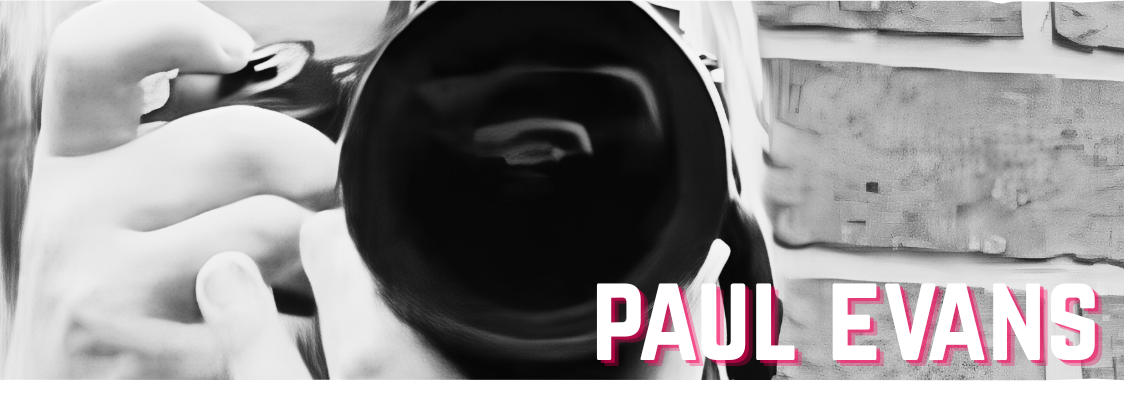
The artist and photographer where Manchester music finds its image
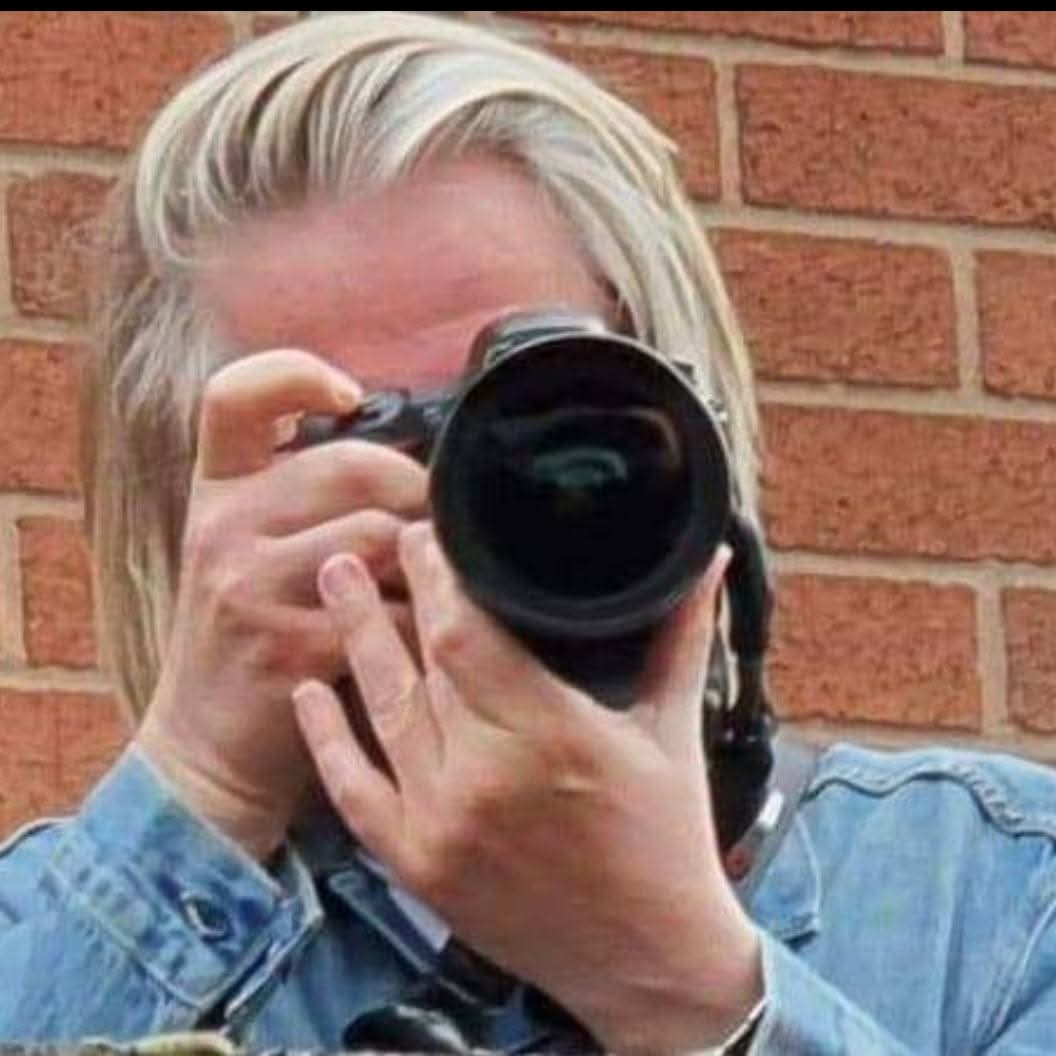
From record sleeves and Northern Quarter gigs to Johnny Marr, The Cure, Peter Hook and a life-changing pause, Artist and Photographer Paul Evans is still making music art you can see and want to keep on the wall. I’m a long-time admirer of Pauls work and have a number of pieces dotted around my house, so I was delighted to finally catch up with him to reminisce. Paul recalls at age five or six, while other children were discovering the usual things children discover, he was sitting on the floor surrounded by his parents’ records: The Rolling Stones, Elvis, The Kinks, Roy Orbison. He wasn’t really listening, but he was looking. “I didn't call it art until my teens, when I realised I could combine my two obsessions: music and image.” however, the real story begins in Manchester.
Paul moved to the city at 18 in 1986 when Manchester was producing music and imagery that would come to define generations of British culture and he was paying attention to all of it. His formal education came through a First-Class BA (Hons) in Graphic Design at Manchester Art School, where he learned typography, photography, darkroom work, layout and the mechanics of turning an idea into something tangible but “Where I really learned creativity was after University , learning by doing in Manchester. Shooting gigs, designing for bands and building ppsdesign.co.uk from actual commissions. Education taught me what the tools were and how to use them, but it was Manchester and studying the work of Peter Saville, Malcolm Garrett and Kevin Cummins that taught me what to say with them. So, I guess my real training is really my fascination with Manchester, music and 30+ years of saying yes!”
Then came the gigs, lots and lots of gigs followed by photographing three bands a night in Manchester’s grassroots venues, terrible light, an old camera – what could possibly go wrong! “I still use that camera, to be honest. you work with what you've got and you learn fast” it appears to run through everything he does.
Then more than three decades later, that early obsession became the official launch of Painted Papillon Smile in 2018 - a creative practice that sits somewhere between music photography, graphic design and art prints. It is, in Pauls words “33 1/3 design, 33 1/3 photography and 33 1/3 art prints “: a perfect nod to the speed of vinyl LPs! For more than two of those decades, he also worked as an art and design lecturer. Creativity, however, was never something he could comfortably put away at the end of the working day. “Being creative isn't a choice to me, it's something I have to do. It's like a disease, some kind of ism.” he says.
“Tell me about the name Painted///Papillon///Smile Paul?” (Paul referred to his excellent notes)
‘Papillon — French for butterfly — represents transformation, fragility and boldness. The Painted Smile carries something more Mancunian: the idea of putting on a brave face, somewhere between the clown and the poet. The three slashes evoke the tracks on a record, while also nodding towards Manchester’s adidas culture.’ I mentioned “ it sounds like a name that belongs on a record sleeve” and perhaps that’s the point. Paul doesn't simply want to make artwork that accompanies music - he wants to make artwork that becomes part of the music’s life.
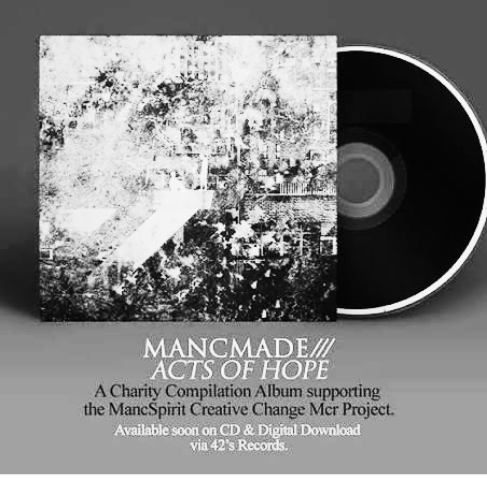
That philosophy defined MancMade /// Acts of Hope, a 2020 album featuring the likes of Johnny Marr, Maxine Peake, Peter Hook, Rowetta and Mark Radcliffe, created to raise money for Manchester’s homeless community. His brief was enormous: how do you bring together multiple artists and a social cause, and turn it into one piece of art? The resulting artwork was praised by Louder Than War for referencing classic Mancunian imagery while reshaping it into an iconic package.
For Paul, that was more than a nice review. “I wasn't just packaging tracks; I was making art that felt like hope.” It is also the philosophy at the centre of Painted///Papillon///Smile: not simply making something look cool but giving music “a correct home”.
The record sleeve still matters and, in an age, where an album can be experienced as a thumbnail on a phone before you've heard a single note Paul and I remain fascinated by the physical record sleeve.
“What’s your artwork process Paul?” Lots of listening, he will take a rough demo and play it repeatedly until he understands what it feels like. Then comes conversation with the artist, rough sketches, textures and images pulled from his own photographic archive. For graphic work, he'll produce numerous layouts before stripping away most of them. “Lots of versions never see the light of day.” he says.
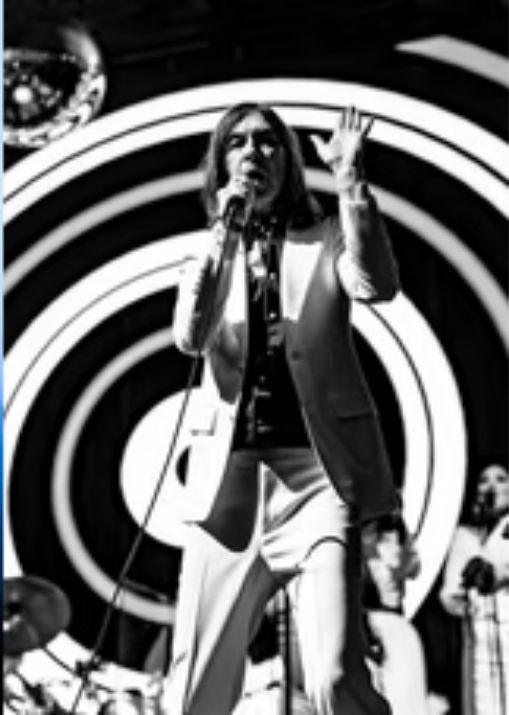
The acid test is physical; Paul mocks up the work as a 12-inch sleeve and asks a simple question: does it hold up from across the room in a record shop? If not, it isn't finished! That obsession comes directly from his childhood record collection and the sleeves that made an impression on him — Bowie, The Smiths, New Order, Joy Division. “I remember the first time I held a 12-inch sleeve and realised the image was part of the music,” he says. “I still design with that in mind.” In other words: will someone want to keep this? The same instinct drives his photography, he wants a ‘moment’ rather than a pose. His first live music photography was The Charlatans (wow!) and his first music portrait was Earl Slick. Over time, the photography became a natural extension of the design work and the bands he was designing for began asking the obvious question: could he shoot the photographs too? The answer was yes. “I was tired of being told that design and photography should be separate jobs.” His preferred photographic environment is similarly instinctive: one red light, plenty of smoke, and a band giving him something to fight for “Polished pop can be too clean, if I have to fight the light to get the shot, it's my kind of band and shoot.” Peter Hook, Echo & The Bunnymen and The Jesus and Mary Chain were among the acts he most wanted to photograph when he started. It makes sense, these are artists whose visual identity have always been as atmospheric as their music.
“Who are your artistic influences?”
L.S. Lowry sits alongside Factory Records, The Suffragette movement as well, but Paul doesn't give you a conventional list, he gives you four worlds: record sleeve designers, music photographers, classic artists and Manchester itself, everything he produced has been influenced by its music, poetry, streets, history, people and even “the light at 4pm in November”.
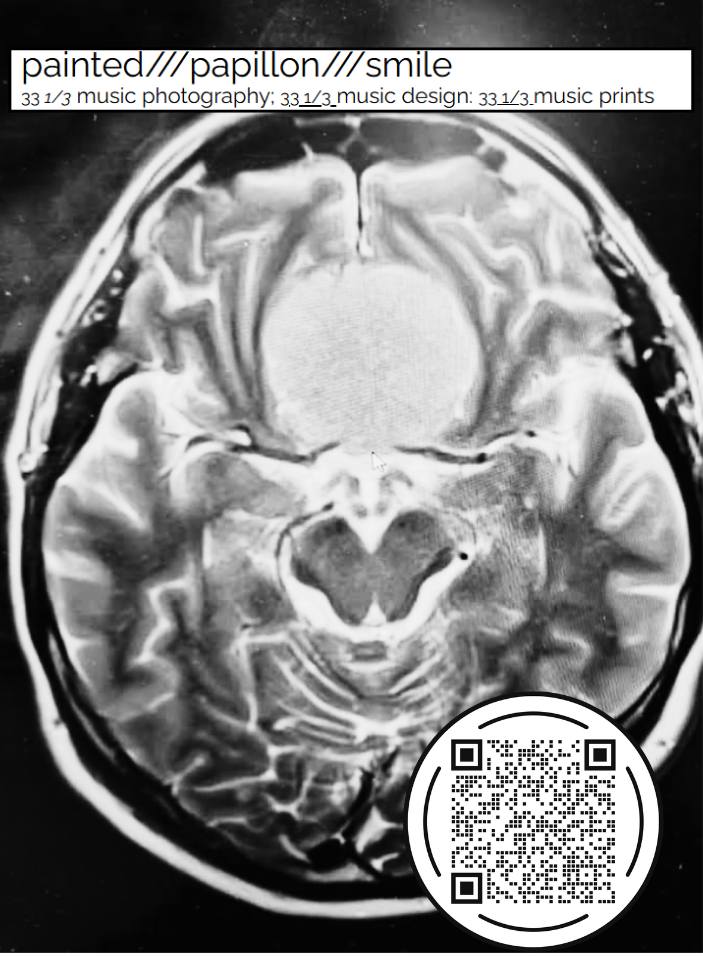
There is, unfortunately, another chapter to the story. Last August, Paul lost his sight. The following September, he underwent surgery to remove a large brain tumour, and the experience forced Painted///Papillon///Smile to pause, but “I’m still here and Painted Papillon Smile is still here,” he says. “It's just been in the dark for a bit, literally for me, and now it's slowly coming back into the light.” and perhaps the most revealing thing about Paul is that, even after everything, he is still thinking about what's next. It includes a new series of music prints for a solo exhibition in Macclesfield, ‘Dream as if you'll live forever, live as if you'll die today’ running from 16th November to 16th January, check Paul’s socials for more info – FB painted.papillon.smile It is a fitting place to leave the story and we did carry on for a long time afterwards and even nipped to a vinyl store in Northwich but for now, I have run out of space! Something tells me we will meet up soon though, cheers Paul.